
Authentic Brazilian Jiu-Jitsu Classes in Mamaroneck for Adults
Who offers authentic Brazilian jiu-jitsu classes in Mamaroneck for adults?
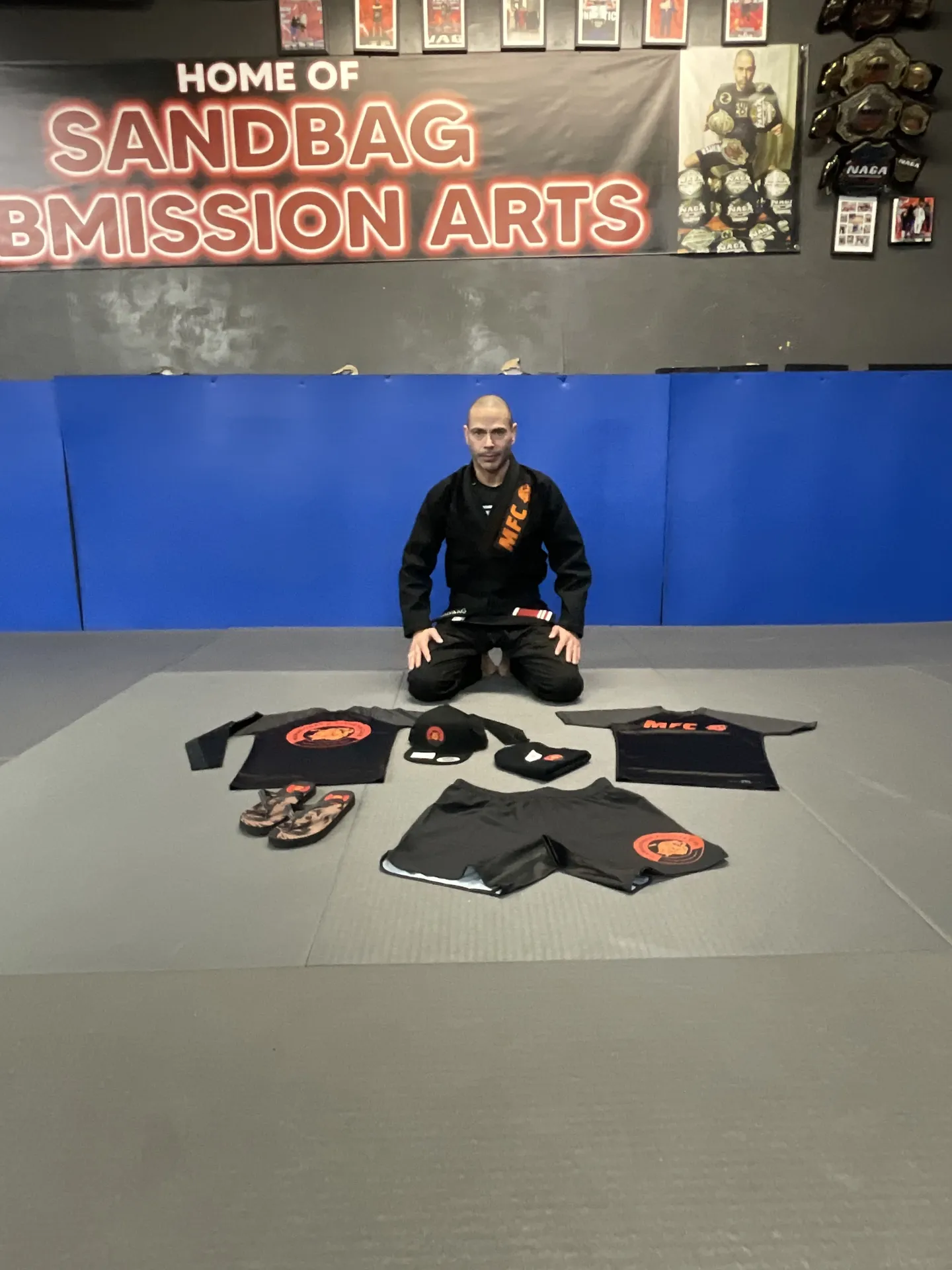
Adults can train real Brazilian Jiu-Jitsu in Mamaroneck at Mamaroneck Fitness Club, through the Sandbag Submission Arts BJJ program at MFC. The adult classes are open to people with little or no grappling experience. That includes people who have never worn a gi, never been on a mat and are not sure they belong in the room. You do.
That answers the "where," but the harder question is how you know a class is the real thing. Plenty of gyms add a jiu-jitsu class to the schedule. Fewer teach it the way it is meant to be taught: fundamentals first, live training under control, and a coach whose rank you can trace. If you are searching for Brazilian Jiu-Jitsu classes in Mamaroneck, NY, the rest of this piece gives you a checklist for any school, MFC included. After that, it covers what your first months will feel like, how to choose between gi and no-gi, and why the room's culture matters as much as the curriculum.
What authentic Brazilian jiu-jitsu means and how to verify BJJ instructor lineage
Authentic Brazilian Jiu-Jitsu means you can check a short list of signals before you sign anything. If you are still comparing styles, our piece on choosing a martial arts class that fits you offers broader guidance. For BJJ specifically, though, these are the signals that count.
Start with lineage, because it is the hardest thing to fake. Every legitimate black belt was promoted by another black belt, and that chain runs back through a known team or association. So ask the head instructor who promoted them and when. A real coach answers in one sentence and is usually proud to. Most affiliations also list their instructors and schools, and the promoting coach will recognize the name. By contrast, a vague answer, a story that shifts, or a "self-taught" black belt should make you cautious.
Lineage tells you where the coach came from. The belt system, on the other hand, tells you how the school treats its students. Adult BJJ runs white, blue, purple, brown and black, with stripes in between. Promotions take years, not months. As a result, a school handing out belts for attendance alone, or selling rank in packages, is a warning sign. A healthy room also shows a spread of belts on the mat, which suggests students stay long enough to progress.
Finally, watch a class, since how a room trains says more than any website. A good adult program teaches a structured fundamentals curriculum, with positions, escapes and control, before it asks you to roll hard. Live rolling should be controlled. Partners match intensity, upper belts pace themselves against new people, and a tap ends the round instantly with no argument. Our guide on how safe jiu-jitsu is for beginners covers tapping culture and partner selection in more detail.
Here is the checklist in one place, with how MFC's Sandbag Submission Arts program answers each item:
| Signal to check | What a good answer looks like | How MFC addresses it |
|---|---|---|
| Instructor lineage and promoter | A named black belt promoter and a known team or association | Ask the coach on your trial who promoted them, then confirm it with that affiliation |
| Black belt on the mat | A ranked coach running and watching the class | Meet the coach running Sandbag Submission Arts on your first visit |
| Structured fundamentals curriculum | Positions, escapes and control taught in order | Fundamentals-first adult curriculum built for new grapplers |
| Controlled live rolling | Partners match pace, and upper belts slow down for beginners | Live rolling is part of class, run under coach supervision |
| Tapping and safety culture | Tap early, release instantly, no ego | Watch a round on your trial and see how taps are handled |
| Trial and contract terms | A no-risk first class and clear membership terms | A free trial class before you commit |
The point of the table is that you never have to take a school's word for it. Every row is something you can see or ask about in a single visit.
BJJ for adult beginners: your first months and whether to start in gi or no-gi
Once you have found a legitimate room, your first months are about learning positions, escapes and when to tap. You are not there to win rounds. Starting at 30, 40 or 50 is normal in an adult BJJ room. In fact, the people who progress are the ones who keep showing up, not the ones who walked in most athletic.
Most classes follow a rhythm you will recognize within a week. There is a warmup built from grappling movements, then a coach demonstrates a technique, and then you drill it with a partner several times on each side. Classes usually end with live rounds. Knowing that structure helps, because you can stop worrying about what comes next and focus on the move in front of you.
Even so, the first few weeks will feel like a new language. For example, you will learn what guard is, what mount and side control are, and why position comes before submission. You will also drill escapes from bad spots, because you are going to spend a lot of time in bad spots. That is the job at white belt. Expect to feel lost in your first rolls, since your partner will move in ways you cannot read yet. Everyone goes through it, and that gap closes one class at a time.
Your body needs time to adjust as well. Grappling uses your grip, neck, hips and core in ways a treadmill never touched, so the first couple of weeks bring soreness. Hydrate, sleep and keep coming back. It fades fast.
Because recovery slows with age, the single most useful habit for an older beginner is tapping early. Tap to chokes before they're tight. Tap to joint locks before they hurt. Nobody in a good room keeps score of your taps, and tapping early is how you keep training for years instead of weeks.
The same logic applies to frequency. Two or three sessions a week is the sweet spot for most working adults, because it is enough for techniques to stick while leaving time for your joints to recover. Consistent practice beats bursts of five classes followed by two weeks off. For a deeper walkthrough, read what your first weeks of BJJ actually look like.
The other early decision is what to wear. For most recreational adults, starting in the gi is the better choice, though either works if the fundamentals are taught well. The difference comes down to friction. In the gi, you and your partner can grab collars, sleeves and pants, which gives you handles. As a result, movement gets slower and more deliberate, and you learn to hold position rather than slip out of it. Escapes become more technical because you can't just muscle or sweat your way free. For a nervous beginner, that slower pace is a gift, since you have time to think.
No-gi, by contrast, swaps the uniform for a rash guard and shorts. Without fabric to hold, grips shift to wrists, necks and underhooks. The pace picks up and scrambles look more like wrestling. So no-gi suits people who like speed and already have some athletic background. Both carry over to self-defense, the gi to grabbing a jacket and no-gi to clinching someone in a T-shirt. That is why many adults start in the gi, then add no-gi once their base is solid. Whichever you choose, ask whether the class teaches positions in order, because that matters more than what you wear.

Why a family-run, multi-discipline gym suits adult BJJ classes in westchester
Where you train shapes what you learn. For a recreational adult, a multi-discipline gym offers more than jiu-jitsu alone: takedowns, striking and conditioning under one roof. As a result, you build a complete game without a second membership.
The biggest gap in many BJJ-only programs is the standing game. Classes often start from the knees, which is efficient for drilling but leaves takedowns underdeveloped. At Mamaroneck Fitness Club, judo runs alongside BJJ, so you can learn to throw, trip and control someone on the feet, then finish on the ground. If you want to see how the two arts fit together, read how judo and jiu-jitsu differ.
Self-defense gets rounder too, because Muay Thai and boxing teach you to manage distance, see strikes coming and close the gap safely. Conditioning is the final piece. Mamaroneck Fitness Club has a full gym floor for strength and conditioning, so you can build the hip, grip and back strength that keeps you healthy on the mat between classes.
To be fair, a BJJ-only academy has a real strength of its own. It usually offers more jiu-jitsu-specific class times and a deeper competition focus. For adults who train for fitness, confidence and self-defense, however, the multi-discipline setup tends to fit better. The table sets the two side by side.
| Multi-discipline gym (MFC) | BJJ-only academy | |
|---|---|---|
| Class focus | BJJ plus five other martial arts | Jiu-jitsu only, often with more BJJ class times |
| Takedowns and standing work | Dedicated judo classes in the same building | Taught within BJJ classes as time allows |
| Striking for self-defense | Muay Thai, boxing and kickboxing on site | Usually not offered |
| Conditioning | Full gym floor for strength and conditioning | Typically mat space only |
| Fit for recreational adults | Built around variety and steady progress | Strong fit for jiu-jitsu specialists and competitors |
Still, the best schedule matters less than the people on the mat. A great technique list means nothing if every round feels like a fight for survival against someone with something to prove. That is why the controlled rolling from the checklist above makes the difference in practice. Good partners give you room to try the escape you just learned. Afterward, they tell you what they saw and laugh with you about the sweep that went sideways. That is how you get better, and it's how the mat gets fun.
Mamaroneck Fitness Club is family-run, and the room feels like it. It is friendly and a little gritty. People work hard, then hang around after class talking about the roll they just had. New faces get learned fast, so the guy who tapped you on Tuesday is the guy showing you the counter on Thursday. Nobody is trying to win the warmup. This is the party, and you're invited.
How to start Brazilian jiu-jitsu classes in Mamaroneck, NY this week
The simplest way to put all of this to work is to book a free trial class at Mamaroneck Fitness Club and run the checklist yourself. Bring water and simple athletic clothes, such as a T-shirt and shorts or leggings without zippers. Arrive a few minutes early so the coach can meet you before the warmup, which is also a good moment to ask about lineage. A good coach will be glad you asked.
During class, watch how the room rolls. Notice who slows down for newer people, how taps are handled and whether the technique builds on itself. If what you see matches the table above, you have found a room worth coming back to.
Beyond jiu-jitsu, your BJJ membership opens the door to more. MFC teaches six martial arts under one membership: Muay Thai, BJJ, boxing, karate, judo and kickboxing, for adults and kids. Start with one class this week. The rest follows from showing up.
FAQ
Do I need to be in shape before my first BJJ class?
- Jiu-jitsu builds the conditioning it needs, and a good fundamentals class scales to whatever shape you walk in with. The early weeks will tire you out because grappling uses muscles you don't normally train. So pace yourself, rest when you need to and keep coming back. Your fitness improves fastest on the mat itself.
What should I bring to my first Brazilian jiu-jitsu class?
Bring water, a T-shirt and athletic shorts or leggings without zippers or pockets, and sandals for walking off the mat. Trim your nails and leave jewelry at home. You don't need a gi for a trial class. If you stick with it, the coach can tell you which gi or rash guard to get.
How many times a week should an adult beginner train BJJ?
Two or three times a week works for most adults, because it gives techniques time to stick while your joints and grip recover. Consistency matters far more than volume. For example, showing up twice a week every week will move you further than a burst of daily classes followed by a long break.
Is Brazilian jiu-jitsu useful for self-defense?
Yes. BJJ teaches you to control a bigger person, escape bad positions on the ground and end a confrontation without trading punches. Its value grows when you add takedowns from judo and distance management from striking. Live rolling against resisting partners is what makes it work under pressure, because you practice against real effort, not choreography.