
Can You Get in Shape with Kickboxing Only?
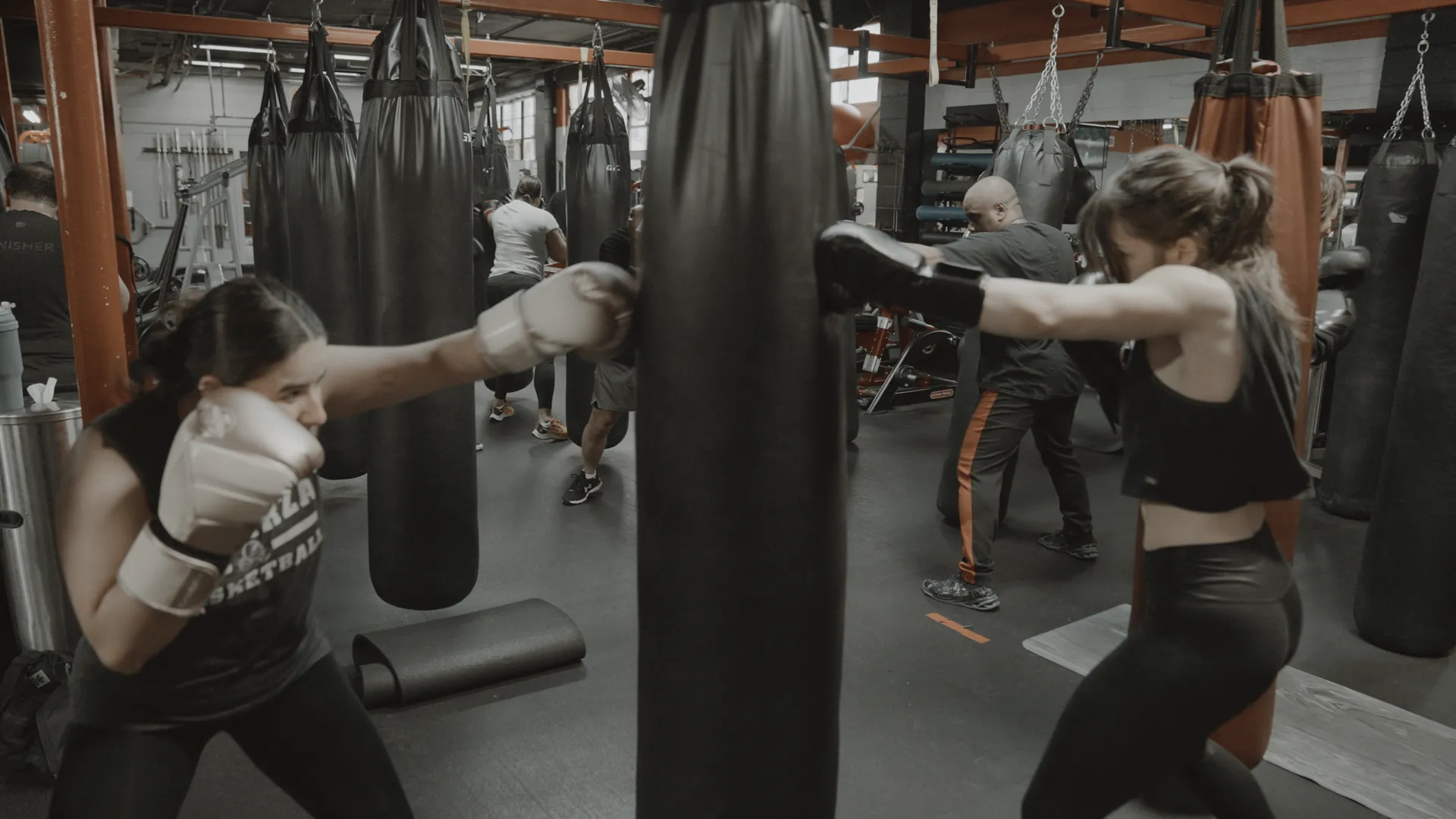
Yes, you can get in shape doing only kickboxing classes, with a few gaps to know about
Yes. Kickboxing classes alone can get an adult recreational trainee into real shape: better cardio, solid conditioning, sharper coordination and steady fat loss. If you want to act on that this week, kickboxing classes for adults in Mamaroneck at Mamaroneck Fitness Club are the practical place to start. You learn stance, guard and clean punches, and you get worked hard while you learn them.
The honest answer, however, comes with a few gaps. Kickboxing does not load your legs the way a heavy squat does, and it barely trains your pulling muscles. It also has no built-in progressive overload, because a heavy bag weighs the same in month six as it did on day one. Throwing thousands of strikes tightens hips and shoulders unless you give them some attention. And no amount of rounds will outwork a diet that keeps refilling the tank.
So if you ask whether you can get in shape with kickboxing only, the answer is yes for most people who simply want to feel fit, move well and drop some weight. If you want more than that, you add a little. The rest of this piece covers what three classes a week actually build, what kind of class to pick, where striking runs out and the minimum to bolt on.
How many kickboxing classes a week to see results, and why eating decides the scale
Three classes a week is the number that works for most adults, because it can cover the aerobic half of the federal activity guideline. The U.S. Department of Health and Human Services recommends 150 minutes of moderate aerobic activity a week, or 75 minutes of vigorous activity, or a mix of the two. Three one-hour classes give you enough time on the clock. Whether you hit the target, though, depends on how much of that hour you spend working rounds rather than standing around between drills.
Those minutes go further in kickboxing than in a steady jog because of how the work is structured. A 2026 study in the journal Sports describes kickboxing as an intermittent, acyclic combat sport that taxes both the aerobic and anaerobic energy systems. In plain terms, you work in bursts, change direction constantly and never settle into one steady rhythm. As a result, your heart and lungs train for the long haul while your muscles train for short, sharp efforts. A jog trains mostly one of those.
Because both systems are working, results come in a predictable order. Your breathing and recovery between rounds improve first, often within the first few weeks, so the round that wrecked you early on starts to feel manageable. Coordination comes next: your feet stop tangling, your combinations land cleaner, and your guard comes back without a coach yelling about it. Visible changes in the mirror come last. Two classes a week will still move you forward, just more slowly. Four or five can work once your body is used to the load, but most people get further by showing up three times a week, every week, for months.
That last stage, the mirror, is where food takes over. Kickboxing for weight loss works well, but the class handles only half the job. How many calories a session burns depends on your body size, the class format and how hard you really push the rounds. For example, a bigger person working hard on the bag burns far more than a lighter person coasting through combos. That is why any single number you see online is a rough average that may not fit you at all.
What doesn't vary is the math on the other side. A hard class followed by a large takeout order and a few drinks can cancel out the session. Many people also feel hungrier after training and eat more without noticing. As a result, plenty of trainees get fitter for months while the scale barely moves.
You don't need a strict diet to fix this, because a few habits do most of the work:
- Build each meal around a palm-sized portion of protein, which helps you stay full and recover between classes.
- Fill half the plate with vegetables or fruit.
- Drink water during and after class instead of sports drinks.
- Eat a normal meal after an evening class rather than grazing until bed.
- Keep alcohol to a couple of nights a week.
Get those right and the conditioning you build in class starts showing up on your body.
Bag fitness classes and technique-and-pad classes build different kinds of fit
Once you know how often to train, the next choice is what kind of class to train in, because bag-based cardio classes and technique-and-pad classes build different kinds of fitness. A bag-cardio class is mostly hard intervals: punch the bag fast, rest briefly, repeat to music. A technique-and-pad class, by contrast, mixes drilling, partner pad work and conditioning rounds, with a coach correcting how you throw.
Research on hard intervals shows what that interval work buys you. A 2026 study of trained kickboxing athletes found that three weeks of sprint interval training significantly improved recovery time, critical power and time to exhaustion, but did not significantly improve VO2peak. Those were trained athletes, not beginners, so read it as a pointer rather than a promise. Even so, the lesson holds. Hard rounds make you recover faster and keep working longer, which is exactly what most people mean when they say "in shape."
Technique work, however, adds something a bag-cardio hour can't. Mamaroneck Fitness Club teaches kickboxing as a martial art, built on fundamentals: stance, guard, footwork and clean technique. That gives you coordination, balance and control, which carry over to everything else you do. It also keeps you interested, because getting better at a skill is a stronger reason to come back than a calorie readout. If you are still choosing a striking style, here is how Muay Thai and kickboxing training compare.
Is kickboxing enough to build muscle? No, but the fix takes about 45 minutes a week
Whichever class you choose, kickboxing builds some muscle and endurance but not real strength on its own. The same HHS guidance that the three classes satisfy on cardio lists strength as a separate line item for at least two days a week, and a striking class only partly fills that slot.
Kickboxing vs strength training comes down to load. Kicking, bouncing in your stance and holding your guard build muscular endurance in your legs, shoulders and core. None of it gets heavier over time, though. Muscle and bone respond to progressive overload, meaning a little more weight or a few more reps as the weeks go on, and a bag gives you none of that. Striking is also almost all pushing: punches extend the arm forward, so your back and pulling muscles do little. Over months, that imbalance can pull your posture forward. A short session with a barbell or dumbbells fixes most of this, so start with a simple free-weight session for real strength.
Repetition creates the other gap. Thousands of kicks and punches tighten the hips and the front of the shoulders, and if you ignore that long enough you get stiffness or overuse aches. For that reason, a few minutes of mobility work built for combat sports after class keeps you training without breaks.
| Fitness area | Kickboxing only | Simple add-on |
|---|---|---|
| Cardio | Covered | None needed |
| Conditioning | Covered | None needed |
| Coordination and footwork | Covered | None needed |
| Core | Partly covered | Planks, carries, hanging knee raises |
| Heavy lower-body strength | Not covered | Squats or deadlifts once a week |
| Pulling strength | Not covered | Rows and pull-ups |
| Mobility | Partly covered | Hip and shoulder work after class |
| Fat loss | Covered, if eating supports it | Basic eating habits |
The table makes the split clear. Kickboxing handles the engine, while the gaps sit in heavy strength, pulling and mobility. Because each gap takes very little time to fill, the upgrade is small. Add one short strength session a week with a squat or deadlift, a press and a row. Then add a few minutes of hip and shoulder mobility after each class, and keep the eating habits from earlier.
Here's what each weekly plan realistically gives an adult who sticks with it for 8 to 12 weeks:
| Weekly plan | What it includes | What to expect after 8-12 weeks |
|---|---|---|
| Kickboxing only | 3 classes | Much better cardio and recovery, cleaner technique, some fat loss if eating supports it |
| Kickboxing plus strength | 3 classes, 1 short lifting session | All of the above, plus noticeably stronger legs and back and better posture |
| Kickboxing plus strength plus mobility | 3 classes, 1 lifting session, mobility after class | All of the above, plus looser hips and shoulders and fewer nagging aches |
The jump from the first row to the second costs about 45 minutes a week. For most people, that's the best trade available.
The people who get fit are the ones a crew expects to see
Every plan above, however, depends on one thing: you have to keep showing up. A flawless plan you quit in week five builds nothing. By contrast, a decent plan you follow for a year changes your body and your confidence.
Willpower rarely keeps people coming back, but other people do. When your training partner texts to ask where you were on Tuesday, you show up on Thursday. When the coach knows your name and remembers the combination you struggled with, you want to come back and nail it. That is what turns three classes a week into months of training, and it's a big part of what a good gym should give you beyond a workout.
That is also how Mamaroneck Fitness Club is built. It is a community of members and coaches, friendly and a little gritty. Music's on, pads are popping, and somebody's always talking trash about whose round was harder. As a result, people come for a workout and stay for the crew, leaving with new friends, real confidence and an hour that feels more like a party than a chore. Nobody needs motivating to go to a party. They just need to be expected there.
A crew is also easier to keep when you don't have to leave it to add strength. Mamaroneck Fitness Club offers six disciplines and a full gym floor under one membership: Muay Thai, BJJ, boxing, karate, judo and kickboxing. So you can lift after class, or try judo when you want something new, in the same building with the same people. Your next step is simple. Pick a kickboxing class this week, come in and meet the people you'll be training with.
FAQ
How many calories does a kickboxing class burn?
It varies with your body size, the class format and how hard you work the rounds, so treat any single figure as a loose estimate. A better gauge is your own progress. Track whether your recovery between rounds improves and whether your clothes fit differently after a few weeks of steady classes.
Will kickboxing alone tone my arms and legs?
Kickboxing builds endurance and some firmness in your shoulders, arms, legs and core, and it helps reduce body fat when your eating supports it. However, striking doesn't add load over time. For visibly stronger, more defined legs and back, add one weekly strength session with squats, deadlifts and rows.
Is kickboxing or strength training better for losing fat?
Kickboxing usually burns more during a session and builds conditioning faster. Strength training builds muscle, which helps you keep the results. You lose fat best with both, plus sensible eating. If you can only pick one, choose the one you'll actually show up for three times a week.
Do I need any experience to start kickboxing classes in Mamaroneck, NY?
- Mamaroneck Fitness Club's adult kickboxing classes start with fundamentals: stance, guard, footwork and clean punches. Its coaches scale the intensity to where you are, so beginners and returning athletes train side by side. Bring water, show up a few minutes early for the warmup and expect to meet some good people.